MEDEZE and Chulalongkorn University Announce Successful Project Completion and Technology Transfer for Recombinant Protein Production Supporting the Future Growth of Thailand’s ATMP and Cell Therapy Industries MEDEZE and Chulalongkorn University Announce Successful Project Completion and Technology Transfer for Recombinant Protein Production Supporting the Future Growth of Thailand’s ATMP and Cell Therapy Industries
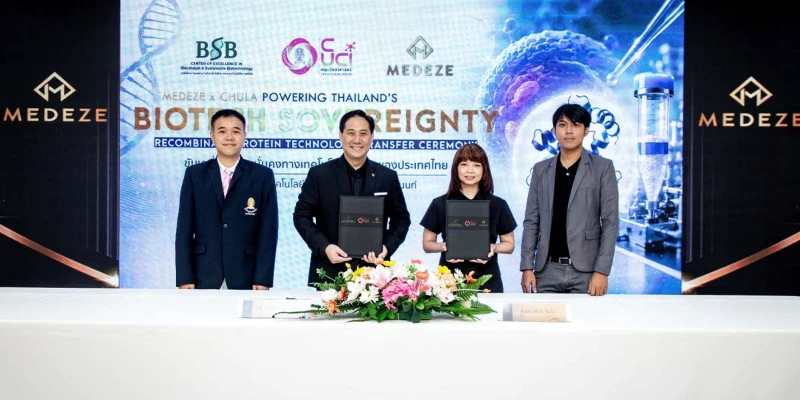
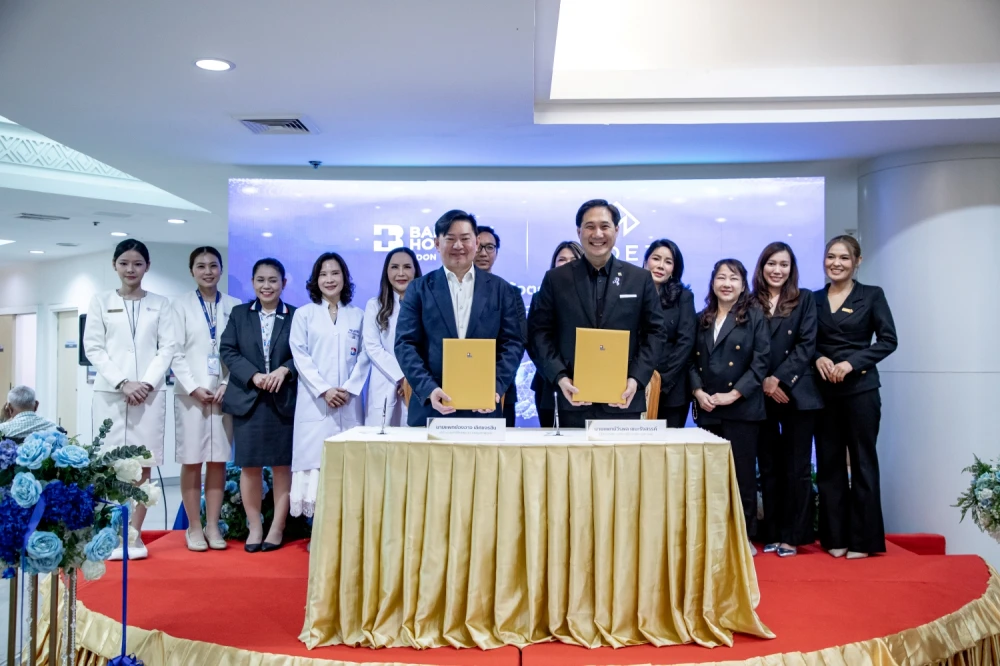
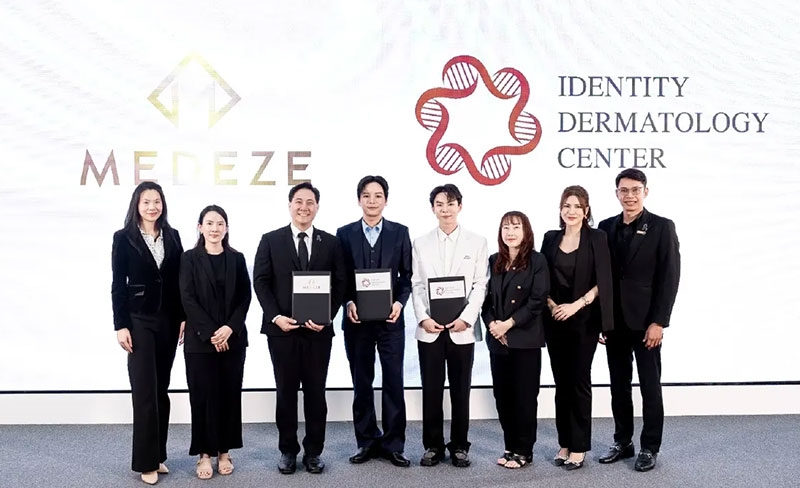
MEDEZE Group Public Company Limited, in collaboration with the Faculty of Science, Chulalongkorn University, through the Center of Excellence in Biocatalysis and Sustainable Biotechnology, has announced a major achievement in developing knowledge and expertise in the production of high-quality biological proteins to support the future growth of Thailand’s Advanced Therapy Medicinal Products (ATMPs), Cell Therapy, and Biologics industries.
The project represents another significant step forward for Thailand in developing deep technology in the fields of life sciences and advanced medicine through the knowledge, expertise, and capabilities of Thai researchers. It aims to strengthen the country’s industrial biotechnology capabilities, reduce reliance on imported biological raw materials, and enhance Thailand’s long-term “biotechnology sovereignty.”
Dr. Veerapol Khemarangsan, said, “This achievement is not merely a research breakthrough; it also demonstrates Thailand’s capability to independently develop deep technology and advanced biotechnology. As the global healthcare industry enters the era of ATMPs, Cell Therapy, and Biologics, countries capable of developing and producing their own biological raw materials will gain significant advantages in terms of health security, competitiveness, and future economic value creation.”
Over the years, MEDEZE has continuously laid the foundation for its entry into the advanced biomedical industry through the development of internationally recognized standards, technologies, and regional leadership. These include:
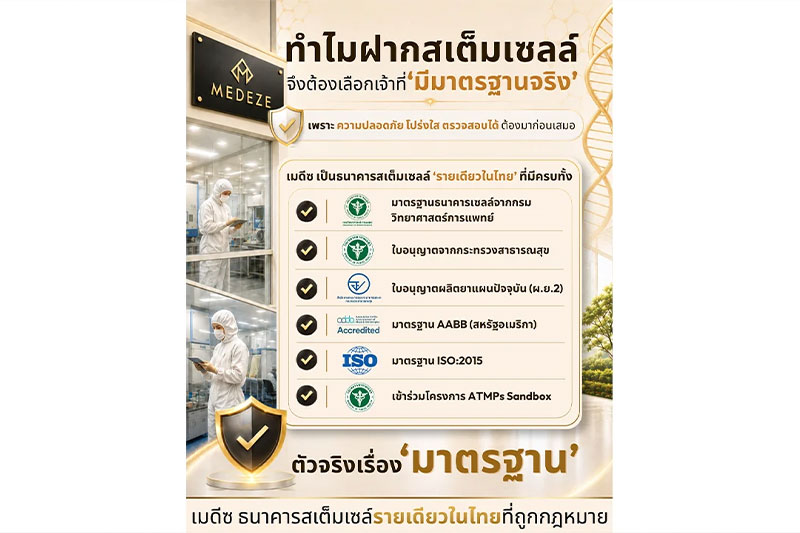
Internationally Recognized Standards: MEDEZE holds ISO 9001:2015 certification and AABB accreditation, which are globally recognized standards for human cell and tissue banking. These certifications reflect the Company’s rigorous quality-management processes and its commitment to the safety of donors and service recipients.
Regional Leadership in Stem Cell Banking: MEDEZE has established itself as a leading stem cell bank in Southeast Asia, supported by its extensive customer base, long-standing experience, and comprehensive network of medical partnerships.
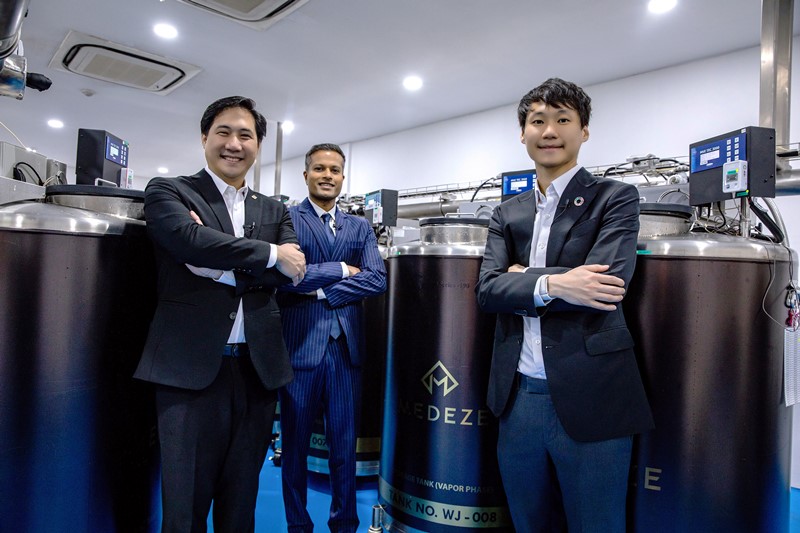
Advanced Cell-Banking Technologies: The Company utilizes the AXP AutoXpress® Platform and advanced cryopreservation technology to preserve the quality and viability of stem cells in accordance with international standards. These technologies also provide a strong foundation for future applications in Cell Therapy and ATMPs.
“The knowledge generated through this project will help advance recombinant protein development from the research stage to the production of strategic biological raw materials for the future medical industry. It also marks an important starting point in transforming Thailand from a ‘user of biotechnology’ into a genuine ‘regional biotechnology developer,’” Dr. Weerapol said.
“This project therefore establishes an important foundation for the development of Thailand’s biotechnology infrastructure. It will support the growth of the advanced biomedical industry and sustainably enhance the country’s competitiveness in the future health economy.”
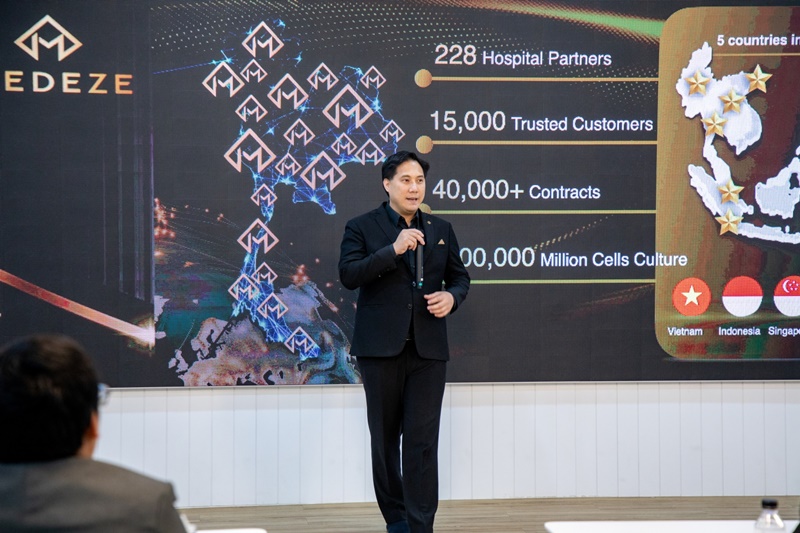
MEDEZE remains the only legally recognized and certified stem cell bank in Thailand, providing comprehensive stem cell and immune cell banking services. With extensive experience and expertise accumulated over many years, the Company has become a leading provider of personalized stem cell banking services in Southeast Asia.
MEDEZE also holds internationally recognized standards, including ISO 9001:2015 certification and AABB accreditation, and utilizes proven technologies such as the AXP AutoXpress® Platform and cryopreservation. These technologies ensure precision and safety throughout every stage of cell separation and storage. The Company’s services cover cord blood, cord tissue, adipose tissue, hair follicles, and Natural Killer (NK) Cells, supporting a wide range of long-term healthcare plans.
Professor Dr. Alisa Wangkanont added, “This research project represents the first major milestone in successfully developing a production process for recombinant human interleukin-2, or rhIL-2. This protein plays an important role in the cultivation and activation of immune cells, including NK cells and T cells, which are essential components of research in Immunotherapy, Cell Therapy, and the development of modern biological medicines.”
“At present, this protein is an essential raw material for both research and industrial-scale production. However, Thailand continues to rely primarily on imports, resulting in high costs and limited accessibility for research and commercial development.”
“The successful development of rhIL-2 production technology will improve access to high-quality biological raw materials for Thailand’s research and industrial sectors. It will also support the growth of the modern biomedical ecosystem, from upstream research to the development of future medical innovations.”
“In addition, the knowledge and production processes developed through this project can be further applied to the development of other recombinant proteins in the future. This represents an important step in strengthening Thailand’s biotechnology capabilities and creating new opportunities for the Biologics and Precision Medicine industries.”
“This achievement was made possible through collaboration between the Faculty of Science, Chulalongkorn University, and MEDEZE Group, combining expertise in protein engineering, cell technology, and industrial-scale applications. The partnership demonstrates the potential of collaboration between academia and the private sector to transform research into tangible economic and social impact.”
The project is also aligned with the United Nations Sustainable Development Goals, particularly Good Health and Well-Being (SDG 3), Industry, Innovation and Infrastructure (SDG 9), and Partnerships for the Goals (SDG 17). It reflects the importance of cooperation between academia and industry in sustainably strengthening Thailand’s biotechnology capabilities.
For more information, please visit: https://www.medezegroup.com/en/
IR Press Releases